


Prime Highlights: The Women’s Sports Store is the UK’s first online store dedicated entirely to women’s sportswear and performance products. The store focuses on gear

Prime Highlights: Umbreen David, Managing Director of Hoama Group Ltd, wins a Stevie Award for Women in Business for Best Female Entrepreneur in Business Services.

Prime Highlight: Manjit Mandeir has launched the 1% Authentic Shift, a 4-week program designed to help professional women overcome burnout, self-doubt, and people-pleasing while reclaiming

Prime Highlights: Tricia Griffith becomes the first woman to lead Progressive, guiding the company from $20 billion to over $75 billion in revenue. Her leadership

Prime Highlights: Susan Riel, CEO of EagleBank, will also become the new Board Chair, effective at the company’s annual meeting in May. Pozez, current Board

Prime Highlights: Little Otter, co-founded by Rebecca Egger and Dr. Helen Egger, is a groundbreaking digital mental health platform focused on early childhood and whole-family

Prime Highlights: Poppy’s Hand-Crafted Popcorn closed its pop-up shop at Birkdale Village in Huntersville, NC, just months after opening in October. The Asheville-based business faced

Prime highlights: Bedrock Energy, a geothermal HVAC startup, raised $12 million to expand its team and scale operations. The company has developed advanced geothermal system

Prime Highlights: Mary Beth Laughton, former Nike executive, will become REI's next president and CEO, succeeding Eric Artz who will retire on March 31, 2025.

Prime Highlights: Clinicians spend nearly 45% of their time on electronic health records (EHR) and administrative tasks, reducing time available for direct patient care. Cydoc.ai,








Dato Shidah Ahmad: A Leader with Purpose, Driving Impact and Inspiring Others
Dato’ Shidah Ahmad’s career is a testament to what purposeful and forward-thinking leadership can achieve – where innovation meets integrity, and success is measured not only by results, but through the people and progress inspired along the way. With a strong foundation in science and engineering, Dato’ Shidah has built an exceptional track record across industries from advanced manufacturing to digital transformation. She plays a pivotal role in managing and advancing the global supply chain within a high-tech innovation company operating in a high-mix, low-volume environment. Her career spans senior leadership roles where she has overseen complex operations, led global teams, and driven transformation at scale. What defines her leadership is not just her strategic acumen, but her ability to mobilize others and rally teams around a clear, common vision. Building Inclusive Cultures and Empowering Women in Tech At the heart of Shidah’s leadership is her commitment to people. She is a well-known advocate for inclusive leadership and talent development, especially for women and early-career professionals. Through mentorship, diversity initiatives, and by setting her own example, she helped shape a more equitable culture – empowering those around her and fostering a lead-by-example practice among leaders in the industry. An empathetic yet decisive leader, she is known for her ability to unlock the potential of those around her, and for staying grounded and resilient – even during times of challenge and change. Her approach to empowering people and bringing them closer to innovation is both forward-thinking and hands-on. She doesn’t just talk about future trends; she acts on them. This is evident in her support as a patron of the Girls in Engineering and Technology program. Shidah plays an active role in inspiring young female students to explore STEM by connecting them with accomplished female mentors in the field – offering meaningful exposure to the real-world industry. Shidah Ahmad journey reflects her own practice in lifelong learning and personal development. While confident, she remains humble and is passionate about championing initiatives that promote talent growth among women. She actively supports the next generation of leaders in reaching their full potential. A Legacy Recognized Today, Dato’ Shidah Ahmad stands as a beacon of reminder to what purposeful leadership looks like. Her induction into Women World Magazine’s Hall of Fame not only etches her career achievements, but the values she represents and the impact she has made. Her journey and accomplishments have created a real, lasting impact on communities and inspired leaders across the industry. As one of the most respected voices in business and technology, her story reminds us that leadership is not just about rising to the top, but to lift as you rise. Read Also : Driving Significant Enrichments: Dee Armstrong Shining Bright with her Patient-first Approach

Driving Significant Enrichments: Dee Armstrong Shining Bright with her Patient-first Approach
In a healthcare landscape that often struggles to truly hear the patient’s voice, Dee Armstrong, Senior Director of Project Management & Operations at ECHO Project Management Group, Inc., is spearheading a revolution—one grounded in empathy, persistence, and a personal promise to make a difference. Her journey from witnessing familial suffering to building a powerful research platform is not just professional—it’s deeply personal. Dee’s career and founding of ECHO were shaped by the emotional experiences of caring for her grandmother, who battled Alzheimer’s, and her uncle, who lived with severe schizophrenia. The lack of personalized care and support they received exposed the critical gaps in the healthcare system. Determined to change this, Dee made a vow in their memory—to ensure no one navigating rare or mental health conditions feels invisible again. That promise gave birth to ECHO Project Management Group, a patient-focused organization devoted to making unheard voices the driving force behind medical progress. With a strong foundation built on integrity, hard work, and compassion, values she credits to her entrepreneurial parents, Dee has combined her leadership and project management expertise to create a company unlike any other in its field. ECHO’s mission is to humanize healthcare data by connecting providers and researchers with real people facing uncommon medical challenges. Under Dee’s leadership, ECHO utilizes innovative methods to gather patient insights—ranging from in-home ethnographies and nationwide telephone interviews to in-depth face-to-face conversations and online forums. Each interaction is designed to capture not just the clinical aspects, but the lived experiences of patients. These stories help shape more responsive treatments, better healthcare products, and ultimately, a more empathetic industry. ECHO specializes in hard-to-reach audiences, particularly in mental health, cancer, and rare diseases, and builds lasting relationships with patients, caregivers, foundations, and support networks. “We aren’t your traditional medical research company,” says Dee. “We go the extra mile every time—because we care.” Beyond operations, Dee plays a pivotal role in motivating her all-women team. Weekly check-ins are as much about emotional support as they are about workflow, creating a workplace where passion meets purpose. “We’re not just coworkers—we’re each other’s biggest supporters,” she emphasizes. As a woman-owned and operated business, ECHO also reflects Dee’s belief in the power of female leadership in healthcare innovation. “Women are now being heard—and in a big way. We can do anything we set our minds to do,” she states. Today, Dee Armstrong is being recognized for her unwavering dedication, her visionary leadership, and her role in transforming patient engagement across the healthcare continuum. Through ECHO, she is proving that real change happens not in numbers, but in stories—and that every voice has the power to shape the future of care. Read More – From Representation to Leadership: How to Empower Female Leadership in Governance?

Regenerative Tissue Science, LLC, Where Science Meets Nature, Makes Headlines in Insights Care for Transforming and Enhancing Bone Health Naturally
In a time when joint degeneration and chronic pain are keeping millions from living life to its full potential, Regenerative Tissue Science, LLC (RTS) is offering more than relief—it is providing renewal. Standing tall amongst the Most Trusted Supplement Manufacturers in Natural Health, 2025 in Insights Care’s edition, RTS is changing the bone and joint health arena with the power of biotechnology and natural healing. At the heart of this revolution lies Cyplexinol®, a scientifically validated, patented, bioactive protein complex of nature. Unlike conventional joint supplements that mask symptoms, Cyplexinol® targets the underlying biological mechanisms that enable bone growth and cartilage repair. It doesn’t just make people feel good—it lets people heal better. RTS, a subsidiary of ZyCal Bioceuticals, has positioned itself as a firm that is genuine, innovative, and efficacious. Under the visionary leadership of James Scaffidi, the company has bridged the gap between orthobiologics and natural nutraceuticals, enabling clinicians and patients to receive next-generation bone and joint treatment. With clinically supported results and a resolute commitment to non-pharmaceutical and non-surgical remedies, RTS has become a go-to for healthcare professionals who seek to improve patient outcomes in a natural way. But what actually sets this RTS apart is its dedication to human experience. This company’s mission is greater than its products—it’s about getting movement, strength, and good living back to people. Every capsule, every compound divulges a promise: to restore independence, vitality, and mobility to individuals through a synthesis of science and nature. This recognition from Insights Care is not only a commendation but also confirmation of RTS’s dedication to tearing down walls of what natural supplements can accomplish. While the demand for integrated, effective, and trusted wellness solutions keeps rising, RTS is ready to take charge of innovations that are as thoughtful as they are revolutionary. In the world of natural health, Regenerative Tissue Science, LLC is not just catching up—it’s at the front, setting the standards.

From Representation to Leadership: How to Empower Female Leadership in Governance?
Empowering women leadership in governance is not merely a matter of equality, but a strategic necessity of any society that wants to achieve sustainable development and inclusive decision-making. Women bring new visions and leadership that greatly improve problem-solving, policy innovation, and community resilience. However, despite growing global acknowledgment of the need for gender-balanced representation, women leaders are still confronted with major obstacles to accessing and thriving in governance systems. Elimination of such obstacles requires reflective, multi-dimensional strategies that promote inclusion and advance leadership capabilities in women at various levels. Though leadership has moved significantly in the direction of gender balance in most countries, there are still structural and cultural barriers to prevent progress. Empowering women’s leadership is not a matter of producing more female leaders but norm and institution change that mold’s those roles. Building Legal and Institutional Frameworks Strong policy and legal instruments are at the center of advancing women’s leadership. Constitutional provisions, anti-discrimination laws, and gender quotas are strong instruments in ensuring the involvement of women in government. They are not just remedial tools for addressing structural exclusion but also markers of a commitment to inclusive governance. When implemented and enforced effectively, they can bring profound change by ensuring more women hold political seats and seats of decision. Legal reforms, however, have to be supported by institutional reforms that ensure they are gender-sensitive. They entail gender budgeting, nondiscriminatory human resources policies, and leadership training that is sensitive to women’s particular challenges in politics. The institutions need to function on a zero-tolerance basis for harassment and create family-responsive workplaces through which women can balance professional and parenting work. These institutional reforms collectively form the basis for a system of governance in which women may not only become part of, but thrive. Building Education and Capacity Education is a powerful catalyst for women’s leadership capacity development, particularly for women who have previously been off the formal leadership pipeline. Education helps women develop the necessary skills, confidence, and qualifications to assume leadership roles. In addition to basic and secondary education, more interventions such as leadership academies, civic education, and training in policies can prepare women with capacities to engage fully in governance. In addition, capacity-building programs should be continuous and targeted. Women in conflict situations or in rural areas can pose different kinds of challenges that require specialized training and empowerment tools. These must include training in mentorship, peer education, and access to successful women role models. As the abilities of women are being developed everywhere at the national, regional, and local levels, governments and institutions can create a more representative and effective cohort of leadership drawn from all segments of society. Deconstructing Cultural Norms and Gender Stereotypes Strong cultural assumptions about the nature of gender roles are among the most enduring barriers to women’s political leadership. Leadership in most societies is still not recognized as a masculine domain, and women who wish to lead are subjectively condemned or socially ostracized. These stereotypes have the potential to dissuade women from striving, occupying, or wishing to occupy leadership positions and thus perpetuate the circle of underrepresentation. Such cultural stories are developed through coordinated public education, inclusive learning, and sharing of effective tales of women leadership. Media and schools have roles in turning attitudes around by highlighting women’s input to the government and redefining leadership as a gender-neutral talent. Social activities that involve men and women in dialogue about gender equality can shape attitudes and bring about facilitation environments for women leaders. Enhancing Political Engagement and Network Accessibility Political empowerment begins with participation. The recruitment of women to vote, join political parties, and run for political offices is central in the building of female leadership in elected office. Political parties and institutions must recruit actively women candidates and invest in the resources that can support their campaigns. These are campaign financing, political campaign workshops, and entry to advice networks that can raise their visibility and credibility. Equally required is the creation of women’s networks and coalitions that can serve as support systems and bases of action. These networks offer spaces for safe experience-sharing, solidarity building, and collective action mobilization. They also offer a channel through which women’s voices can resound in policy agendas and spur reforms. To create such networks, particularly in patriarchal administrations, is the most critical means of preserving women’s leadership and enabling them to contribute to governance. Conclusion Enabling women to be government leaders is not a question of morals, it’s a question of development necessity. Diversification of leadership leads to more representative policies, sharper articulation of the people’s needs, and stronger democratic institutions. But it requires deliberate efforts at achieving gender balance in the government that pierces the entrenched barriers, and brings about shifts in culture so women can lead in a meaningful way. With joint effort and joint cooperation, it is possible that societies can utilize women leaders to the maximum extent and move towards an equally balanced and stimulating future. Read Also : From Exclusion to Empowerment: How to Empower Women in Digital Infrastructure

From Exclusion to Empowerment: How to Empower Women in Digital Infrastructure
As the digital landscape continues to evolve at a rapid pace, the importance of inclusive and diverse participation in the development of digital infrastructure cannot be overstated. Women, despite their significant potential, remain underrepresented in this sector. Empowering women in digital infrastructure is not only a matter of gender equality but also a strategic necessity for driving innovation, increasing productivity, and creating a more equitable future. Key to this empowerment is the investment in education and skill development, which serves as the foundation for fostering women’s participation in this critical field. This article highlights the essential steps and strategies needed to break down barriers and build an inclusive digital infrastructure workforce through education, skill-building initiatives, workplace reforms, and the promotion of entrepreneurship and mentorship. Investing in Education and Skill Development The empowerment of women in digital infrastructure is fundamentally rooted in education. Ensuring that girls and young women have equitable access to high-quality STEM education from early schooling through higher education is critical. Governments and academic institutions must prioritize the integration of digital literacy and technical competencies into standard curricula, while actively working to close gender gaps in participation and retention rates. In addition to formal education, the development of practical, job-ready skills is essential. Programs such as coding boot camps, vocational training, and online certification courses, when designed with women’s specific needs in mind, can play a pivotal role in addressing the existing skills gap. These initiatives should go beyond technical instruction by incorporating mentorship opportunities and support networks to help women successfully navigate entry into what is often a male-dominated sector. Furthermore, targeted scholarships, internships, and apprenticeships can provide crucial pathways into the industry, encouraging sustained participation. Highlighting successful female role models and establishing clear, attainable career trajectories are equally important in fostering a more inclusive and representative digital infrastructure workforce. Promoting Inclusive Work Environments Advancing women’s participation in digital infrastructure necessitates a transformative shift in workplace culture. Organizations must foster genuinely inclusive environments in which women are recognized, respected, and empowered to succeed. Achieving this begins with adopting transparent recruitment processes that prioritize competencies and potential over conventional qualifications, which often inadvertently reinforce male-dominated pathways. To support long-term retention, companies should implement family-friendly policies, including flexible scheduling, remote work arrangements, and comprehensive parental leave. Equally important is the enforcement of robust anti-harassment and anti-discrimination policies, accompanied by well-defined and trusted mechanisms for addressing grievances, ensuring a safe and equitable work environment. Investing in leadership development initiatives tailored specifically for women is also vital. Such programs play a key role in breaking down structural barriers that limit advancement to senior technical or executive roles. By actively promoting women into leadership positions, organizations not only support individual career growth but also cultivate a culture of inclusivity and diverse representation across all levels of the enterprise. Encouraging Women’s Participation in Innovation and Entrepreneurship Women entrepreneurs in the digital infrastructure sector hold significant potential to drive innovation and advance the development of inclusive technologies. However, they frequently encounter systemic obstacles, including limited access to capital, professional networks, and market entry opportunities. Overcoming these challenges is essential to fully leveraging their contributions to the sector. To address these disparities, venture capital firms and funding institutions should implement gender-lens investment strategies that ensure equitable access to financial resources for women-led startups. Similarly, incubators and accelerators must proactively engage and support female entrepreneurs by providing the necessary tools, mentorship, and infrastructure to help scale their ventures effectively. Establishing dedicated platforms that enable women to present their innovations and engage with key stakeholders—such as industry leaders, investors, and policymakers—can enhance visibility and influence. Additionally, promoting the active involvement of women in technical standards committees and policy-making bodies related to digital infrastructure is critical. Such inclusion helps ensure that the technologies and frameworks being developed reflect diverse perspectives and serve the needs of a broader population. Conclusion The path to empowering women in digital infrastructure is multifaceted and requires concerted efforts across various sectors. By investing in education and skill development, creating inclusive work environments, supporting women entrepreneurs, and fostering professional networks and mentorship, we can begin to close the gender gap in this critical field. These initiatives not only support women in overcoming systemic barriers but also enhance the overall strength and innovation of the digital infrastructure sector. Ultimately, empowering women in this space will not only lead to more equitable outcomes but will also drive the technological advancements and inclusive progress necessary for a thriving digital future. Through collective action, we can create a more inclusive and diverse digital landscape that benefits everyone. Read Also : Pioneering Breakthroughs| How Are Women Shaping the Future of Biotechnology

Pioneering Breakthroughs: How Are Women Shaping the Future of Biotechnology
In the age of uncontrolled scientific advancement and unparalleled technological revolution, biotechnology is leading from the front in tackling some of the most critical issues facing humanity. From solving global health crises to developing green technologies for the planet, the possibilities are vast—and increasing, so—is the involvement of women in its breakthroughs. Despite longstanding barriers in STEM, women scientists, entrepreneurs, and leaders are reshaping the biotech landscape with bold ideas, inclusive perspectives, and a commitment to ethical progress. This article highlights the transformative role women are playing in biotechnology, the trailblazers who are breaking boundaries, driving change, and inspiring the next generation. Breaking Barriers and Leading Innovation: Women have long struggled in the sciences, technologies, engineering, and mathematics disciplines with gender bias, mentorship, and structural obstacles. Yet time is evolving now with a number of additional women currently leading the charge in biotechnology. From lab bench to the boardroom, women are driving projects that are challenging some of the most important issues facing humanity — from disease cure to addressing the environment to creating global food security. Take, for example, Dr. Jennifer Doudna, one of the Nobel prize winners in Chemistry for her work on CRISPR gene-editing technology. She was not only dismantling genetic engineering but also opening the gates to even more innovation in the treatment of cancer and genetic disease. Women such as Doudna are the best example of the contribution women are making to biotech at a senior level. Outside the lab, women are launching and establishing biotech firms. CEOs such as Dr. Helen Torley of Halozyme Therapeutics and Dr. Reshma Kewalramani of Vertex Pharmaceuticals are proving that women can take biotech firms to profitability and remain ahead of extremely responsible innovation and patient care. Entrepreneurs such as Dr. Nina Tandon, CEO and co-founder of EpiBone, are breaking the playbook. EpiBone is a regenerative medicine company creating personalized bone tissue from stem cells—technology previously the stuff of science fiction. Tandon’s leadership bridges the gap between engineering and biology and demonstrates the potential of women to lead where the sciences converge. Support networks such as Springboard Enterprises and Women in Bio are also playing an increasingly active role in empowering women founders by providing funding networks, leadership development, and mentoring, further propelling women-led innovation in the life science sector. Entrepreneurship and Startups: Biotech start-ups are the healthiest driving forces pushing the industry today, and women are making their entry in some of the start-ups as lead personalities. Women entrepreneurs are getting mentorship, visibility in sources of funding, and advisory services from organizations like Springboard Enterprises and the Association for Women in Science (AWIS). Innovators such as PanTher Therapeutics’ Dr. Laura Indolfi are forging ahead in cancer treatments and regenerative medicine by setting a path for future women scientists and business leaders to follow. Women entrepreneurs are at the forefront of innovation in the biotech industry, intensely pursuing personalized medicine, non-invasive diagnostics, women’s health, and mental health. Dr. Jessica Mega, co-founder at Verily (Alphabet life sciences’ subsidiary), is a pioneer in precision health through data-driven diagnostic solutions. Meanwhile, startups are addressing environmental issues by developing bio-based materials, clean energy technology, and innovation in agro-technology. A prime example is of Christina Smolke, the founder of Antheia, who designed yeast to make plant-derived medicines in an environmentally friendly way. Furthermore, the convergence between artificial intelligence and big data is transforming biotech, particularly drug discovery and the optimization of care for patients. Another example is of Daphne Koller’s Insitro who utilizes machine learning to propel and speed up drug discovery. Policy Influence and Advocacy: Policy advocacy and engagement efforts towards spearheading gender equity are far-reaching in defining the future of biotechnology. As governments, organizations, and advocacy groups become increasingly aware of the value addition of inclusive leadership and innovation, efforts are being crafted in unison to empower women in STEM occupations, particularly biotech. Proportional funding, inclusive hiring, and leadership development initiatives are closing previous gaps in research, entrepreneurship, and executive levels. Institutional policy programs and legislation, such as more funding for women-owned companies, gender diversity on boards, and grants to underrepresented groups, are allowing increasing numbers of women to participate and thrive in the biotech industry. These efforts not only enhance representation but also broaden the reach of innovation. Women leaders introduce non-traditional ideas to leadership areas such as reproductive health, mental health, individualized medicine, and community-based care. By advancing problems that previously were underinvested or ignored, they are shaping research agendas more responsive to the needs of diverse populations. Coalitions and advocacy networks at the institutional and grassroots, are helping build women’s voice in policymaking and regulatory arenas. This voice ensures that biotech policy and innovation strategies are socially responsive, ethical, and inclusive. In essence, women’s increasing voice in biotech policy and advocacy is reshaping the industry—enabling more inclusive innovation, pushing research frontiers further, and building a more inclusive science and society future. Conclusion: With the biotech industry expanding further, the voice of women in defining its future is no longer muted. From making groundbreaking discoveries to founding mission-driven companies, to battling fair policies, women are rewriting leadership in biotech. Their contributions are not only expanding the frontiers of science but also ensuring that innovation reflects the diverse needs of our global society. Read Also : How Women Business Leaders Build Sustainable Support Systems| Mentorship Networks




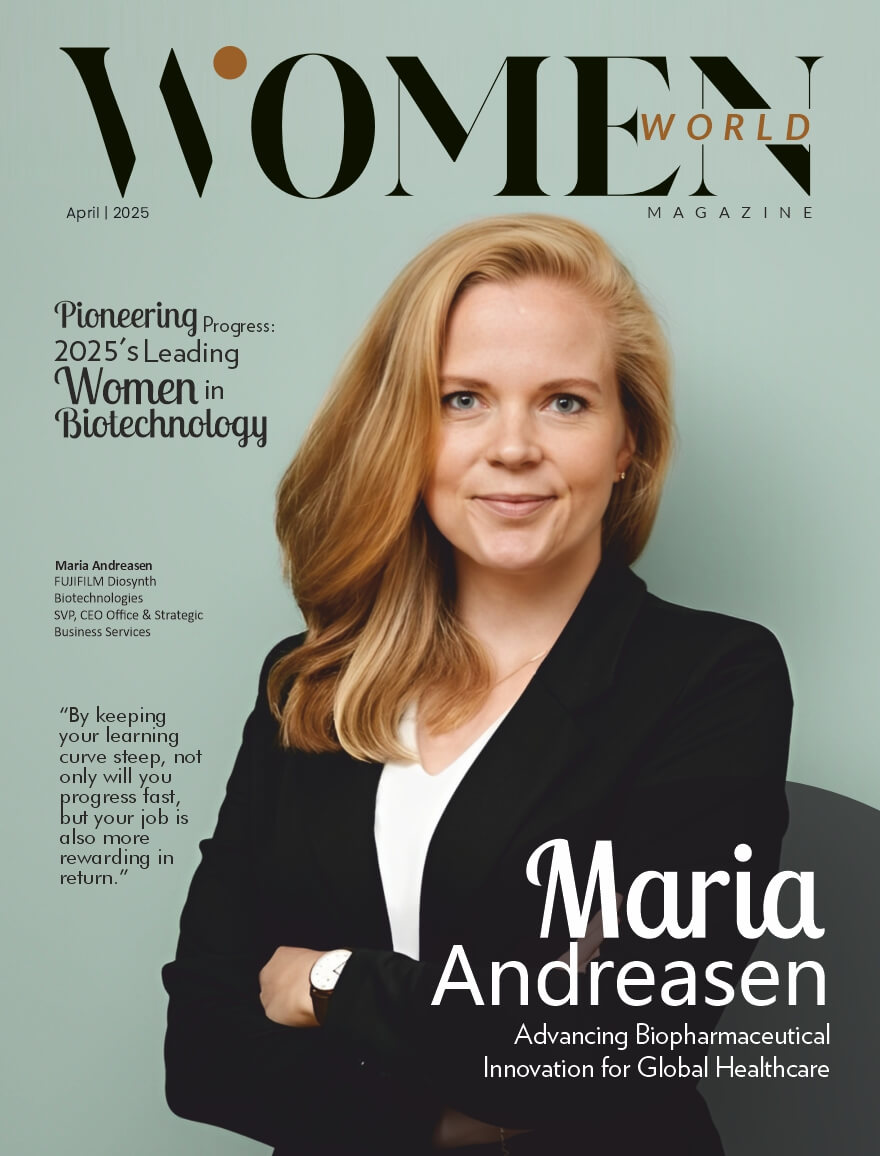
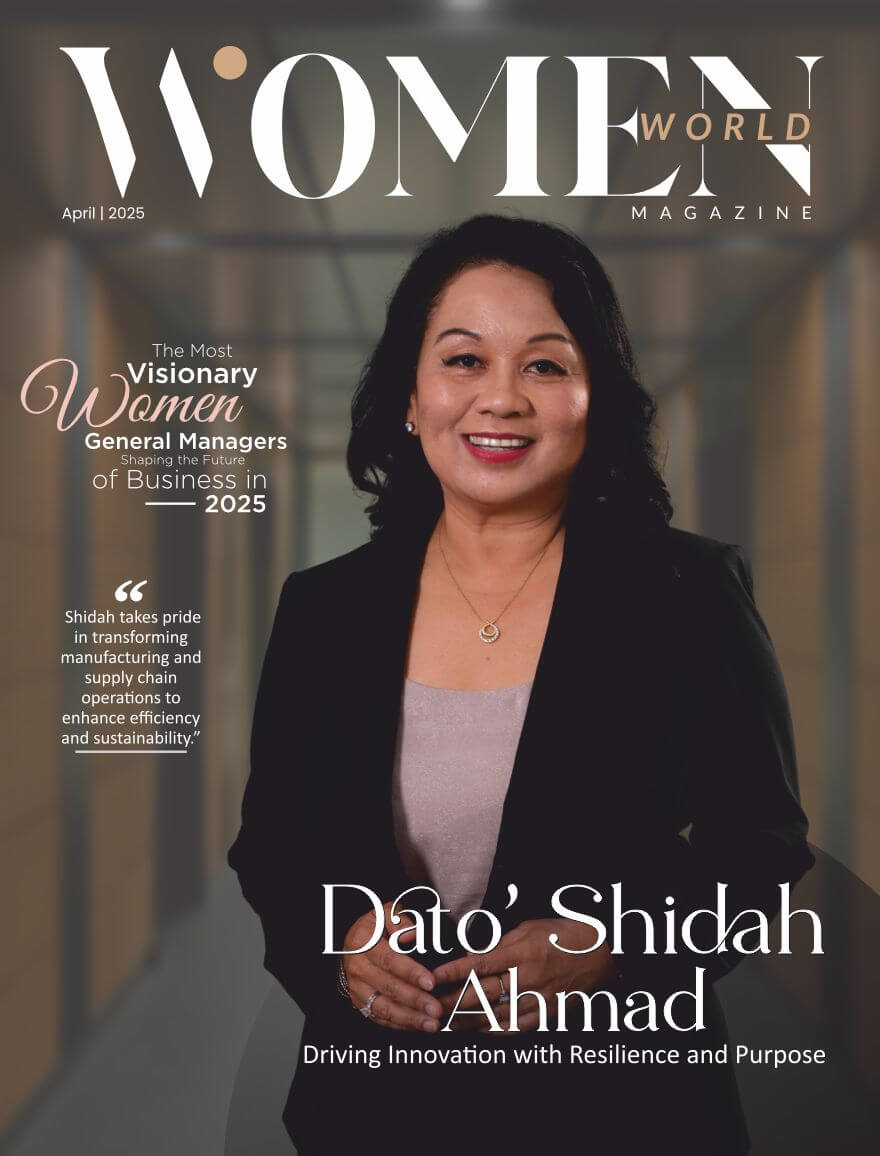






Dato Shidah Ahmad: A Leader with Purpose, Driving Impact and Inspiring Others
Dato’ Shidah Ahmad’s career is a testament to what purposeful and forward-thinking leadership can achieve - where innovation meets integrity,
Driving Significant Enrichments: Dee Armstrong Shining Bright with her Patient-first Approach
In a healthcare landscape that often struggles to truly hear the patient’s voice, Dee Armstrong, Senior Director of Project Management
Regenerative Tissue Science, LLC, Where Science Meets Nature, Makes Headlines in Insights Care for Transforming and Enhancing Bone Health Naturally
In a time when joint degeneration and chronic pain are keeping millions from living life to its full potential, Regenerative
From Representation to Leadership: How to Empower Female Leadership in Governance?
Empowering women leadership in governance is not merely a matter of equality, but a strategic necessity of any society that
From Exclusion to Empowerment: How to Empower Women in Digital Infrastructure
As the digital landscape continues to evolve at a rapid pace, the importance of inclusive and diverse participation in the

European AI Continent Agenda Gains Global Momentum at the Largest Inaugural Tech, Startup & Digital Investment Event
GITEX EUROPE x Ai Everything gears up for Berlin debut as influential leaders and policymakers preview bold cross-border tech partnerships,

Leading with Integrity: How to Promote Women in Ethics 2025 Initiatives
As organizations across the globe strive for greater integrity and accountability, the importance of ethical leadership has never been more

Future of Law: How to Implement AI in Legal Systems Effectively
As the legal landscape evolves in the digital era, Artificial Intelligence (AI) stands at the forefront of transformation, offering unprecedented

GITEX ASIA x Ai Everything Singapore: AI Dominates Discussions as Audiences Analyse Asia’s Game-changing Digital Transformation Trajectory
The region’s largest inaugural tech, startup & digital investments event thrusts the APAC AI revolution into the spotlight with US$1.6

GITEX Expands to Vietnam, Igniting US$200bn National Digital Economy Potential
Hanoi to host the Vietnamese inaugural edition of the world’s largest tech event next October following announcement during GITEX ASIA