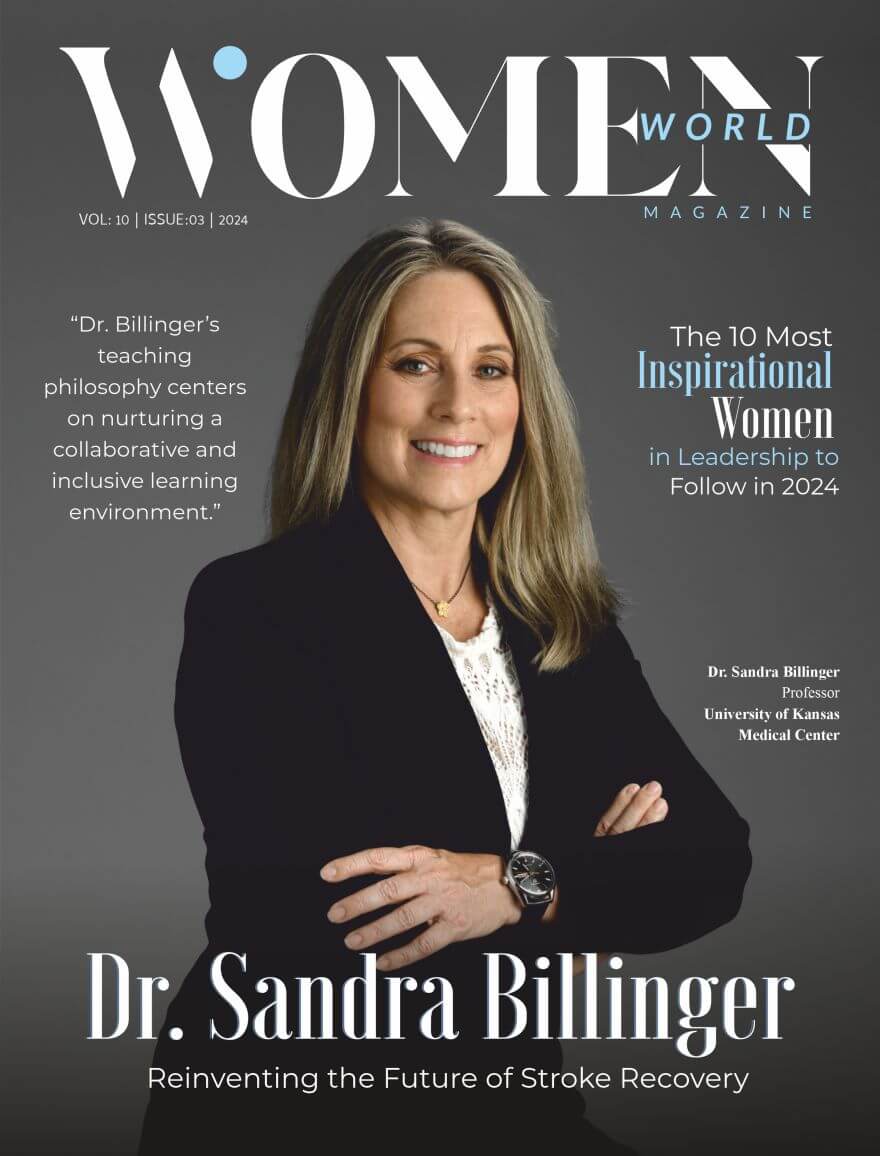
Dr. Sandra Billinger Reinventing the Future of Stroke Recovery
Bridging Research, Innovation, and Practical Application! In medical research, the pursuit of innovative solutions to complex health challenges is a driving force. One area that has garnered significant attention is stroke recovery, a field that focuses on rehabilitating patients after cerebrovascular events. This industry aims to enhance the quality of life for individuals affected by stroke through rigorous scientific research and the development of advanced therapeutic strategies. The integration of exercise science with neurorehabilitation has emerged as a particularly promising approach, offering new insights into optimizing recovery processes and improving overall brain health. A notable figure in this field is Dr. Sandra Billinger, who holds the position of Professor and Vice Chair for Stroke Translational Research. Her journey into academia and research was shaped by personal adversity, which ultimately fueled her dedication to advancing stroke recovery. With a background that uniquely blends clinical experience and academic expertise, she has made substantial contributions to understanding the relationship between physical activity and stroke rehabilitation. Her work exemplifies a deep commitment to both scientific inquiry and practical applications that can significantly impact patient outcomes. The University of Kansas Medical Center, where Dr. Billinger serves as a prominent faculty member, stands at the forefront of this research. This institution is recognized for its innovative approach to medical research and its focus on translating scientific discoveries into real-world improvements in health care. Through its extensive research programs and interdisciplinary collaboration, the University continues to play a crucial role in advancing stroke recovery and brain health, embodying a commitment to excellence in medical science and patient care. Let’s explore the impactful journey of Dr. Billinger: From Personal Adversity to Advancing Stroke Recovery Research Dr. Billinger embarked on a non-traditional path into academia, initially working as a dental assistant. A car accident led to her son’s premature birth and her subsequent inability to return to work. Shortly thereafter, as a single parent with limited resources, she decided to further her education. During her undergraduate studies at Fort Hays State University, Dr. Billinger developed a fascination with the complex connections between exercise and stroke recovery. With limited experience in brain health and neurorehabilitation, she found herself with more questions than answers. This curiosity motivated her to pursue advanced degrees at the University of Kansas Medical Center. She was accepted into the dual degree program, earning both a Master’s Degree in Physical Therapy and a PhD in Rehabilitation Science. Dr. Billinger was fortunate to be mentored by leading experts in rehabilitation science and secured a career development award with Dr. Randolph Nudo, a world-renowned expert in neuroplasticity, as her primary mentor. This award accelerated her research in stroke recovery. The opportunity to contribute to groundbreaking research and witness its real-world impact on stroke recovery and brain health has been incredibly rewarding and fulfilling for Dr. Billinger. Leading Innovation in Stroke Recovery and Brain Health Research Dr. Billinger is a professor of neurology and the Vice Chair for Stroke Translational Research. She is also the Assistant Director of the NeuroImaging Core within the KU Alzheimer’s Disease Research Center. In these leadership roles, she facilitates research and brings interdisciplinary teams together to address groundbreaking scientific questions. This role demands a comprehensive understanding of the scientific literature to drive innovation in stroke recovery and brain health. She directs the Research in Exercise and Cardiovascular Health Laboratory, where NIH-funded studies on stroke recovery and brain health are conducted. As a medical researcher, she investigates treatments that enhance recovery after stroke. Currently, her work focuses on optimizing exercise intensity to improve walking and brain health post-stroke. She aims to improve patient outcomes through rigorous scientific methods, including designing and conducting experiments, analyzing data, and publishing findings. For instance, she developed the total body recumbent stepper (TBRS) submaximal exercise test to better assess physical fitness in individuals’ post-stroke, which she believes will aid healthcare providers and exercise physiologists in more accurately prescribing exercise. Dr. Billinger and her team spent several years developing and refining the process to assess the cerebrovascular kinetic response to exercise protocol. Then she investigated how blood flow delivery changes from rest across various exercise intensities, addressing a gap in the literature regarding cerebrovascular health. This seminal work has been widely adopted by researchers in the field and is essential for understanding how exercise influences cerebral circulation, which is crucial for creating effective rehabilitation protocols for stroke recovery, brain health, and dementia prevention. Her work was recognized by the World Stroke Organization Board of Directors in 2022 as one of the outstanding women who have made significant contributions to stroke and brain health globally. In addition to leading research projects, she mentors graduate students, postdoctoral fellows, and junior faculty, taking great satisfaction in observing their growth and development into independent researchers. Advancing Collaborative Learning and Innovative Teaching Dr. Billinger’s teaching philosophy centers on nurturing a collaborative and inclusive learning environment. She has consistently been an early adopter of innovative approaches, such as simulation laboratory experiences, to ensure students are adept at handling real-world scenarios and the “flipped” classroom model. She invests significant time in building and refining class structures to enhance student participation. A major aspect of her work involves the individualized mentorship of graduate and postdoctoral trainees who have achieved notable success, including publications in top-ranked journals and receiving prestigious awards. She takes immense pride in her leadership and expertise in course and curriculum development, her dedication to mentoring graduate students, and her commitment to cultivating innovative teaching approaches. Her contributions were recognized when several of her mentees nominated her for the Kansas City Central Exchange STEMMy Educator Award, which she was honored to receive in 2021. Navigating the Demands of Leadership and Innovation Balancing these responsibilities requires careful time management and setting clear priorities. Regular self-care and family time are essential to maintaining productivity and well-being. Leading a scientific laboratory involves a considerable time commitment, a reality she initially underestimated when starting her laboratory. Despite the significant demands, she is deeply committed to her work and passionate about advancing