
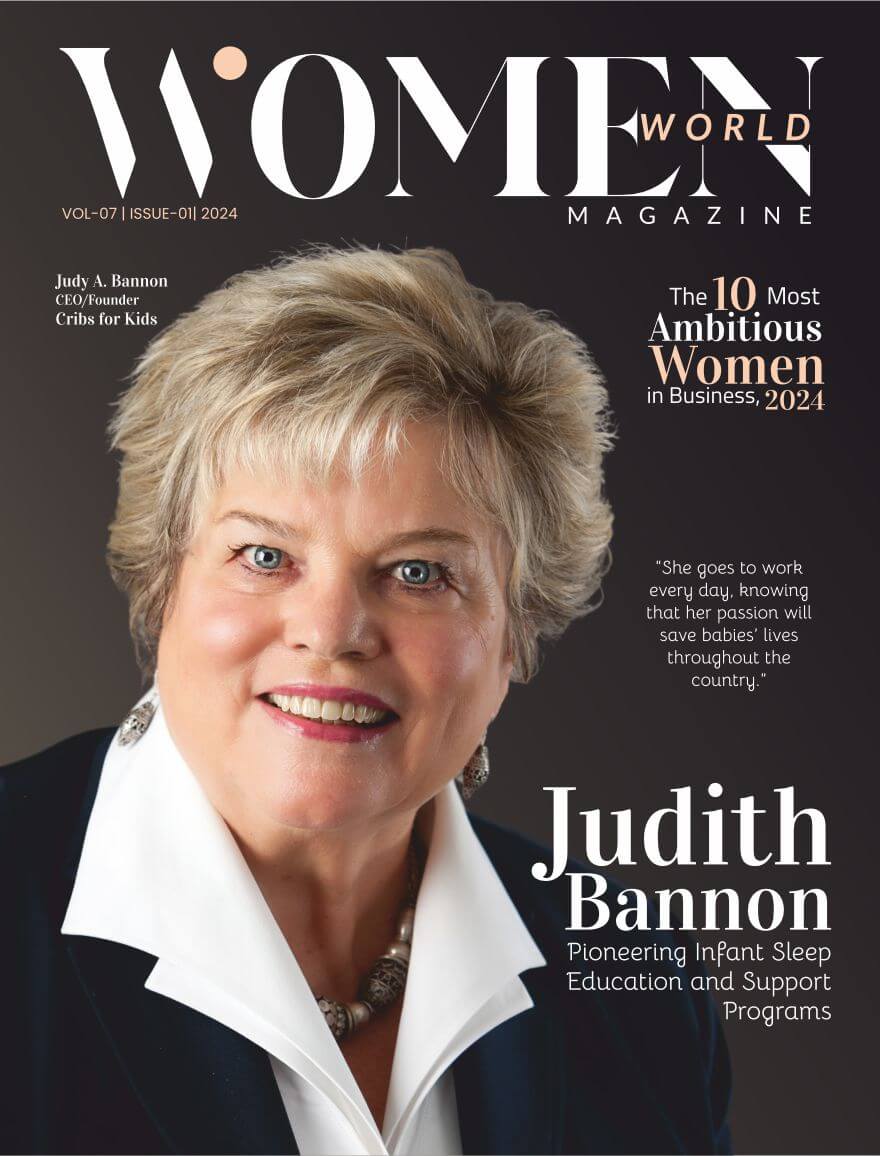

Judith Bannon: Pioneering Infant Sleep Education and Support Programs
Preventing Infant Mortality! The infant care service niche is perpetually working on understanding and preventing Sudden Infant Death Syndrome (SIDS), a leading cause of mortality among newborns. The field has seen significant advancements through initiatives such as the Back to Sleep campaign, emphasizing the importance of sleep positioning in reducing SIDS rates. Over the years, various studies and public health campaigns have worked relentlessly to educate parents and caregivers about safe sleep practices. Despite these efforts, challenges remain in ensuring that all families have access to the necessary resources and information to provide safe sleeping environments for their infants. Judith Bannon, CEO and Founder of Cribs for Kids, has played a crucial role in addressing these challenges. As a dedicated advocate for infant health, Judy has been engaged in initiatives to lower SIDS rates and promote safe sleep education. Her journey began in the late 1980s, when she was deeply involved in development roles and organized significant fundraising events. Judy’s passion for preventing infant deaths led her to become a key figure in the SIDS community, where she pushed forward groundbreaking research and awareness campaigns, ultimately founding impactful programs and initiatives. Cribs for Kids, established under Judy’s guidance, is dedicated to preventing infant sleep-related deaths through education and the provision of safe sleep environments. It has grown from a local initiative to a national non-profit with over 2,000 partners across the United States. The organization offers safe sleep products at discounted prices and provides a range of educational materials and programs to hospitals, health departments, and other partners. Through continuous innovation and commitment, Cribs for Kids has made significant strides in changing the culture of infant sleep safety. Let’s explore Judy’s journey to reducing SIDS rates: A Commitment to Infant Health In 1989, Judy served as the Director of Development for United Cerebral Palsy of the Pittsburgh District, acting as the producer of their Weekend with the Stars annual telethon. This event raised $22 million nationwide for people with cerebral palsy. Ray Mansfield, a former Center for the Pittsburgh Steelers, and his business partner Chuck Puskar, a SIDS Dad and SIDS of PA board chairman, had seen the telethon on TV and approached Judy to become SIDS of Pennsylvania’s first Executive Director. When it came to Judy’s attention that over 10,000 babies a year were dying of Sudden Infant Death Syndrome (SIDS) and no telethons were being held to support research into the cause of these deaths, her decision to accept the position was an easy one. Her goal was to determine what was causing babies to die “mysteriously” in their sleep and then find a way to eliminate these deaths. The Impact of Sleep Position on SIDS Rates By 1992, the only identified risk factors for SIDS were low birth weight, premature births, and smoking during pregnancy and around the infant. In February of that year, Judy was asked to do a marketing presentation at the International SIDS Conference in Sydney, Australia. There, the SIDS community learned about a study conducted in Australia, New Zealand, and the United Kingdom. This study consisted of parents being asked to put their babies to sleep on their backs rather than their tummies to reduce the risk of SIDS. After three years, the rate of babies dying of SIDS plummeted by over 50%. This study marked the beginning of the Back to Sleep Campaign, initiated by the NICHD and the American Academy of Pediatrics (AAP) in the United States in 1994. Meanwhile, in Allegheny County (Pittsburgh, PA), under Judy’s leadership, the team at SIDS of PA was working diligently to spread the Back to Sleep message. The Evolution of Safe Sleep Advocacy By 1996, like the rest of the country, the SIDS rates in Allegheny County had dropped by about 50%, going from 54 a year before the Back to Sleep campaign to 28 deaths in 1996. As a member of the Allegheny County Child Death Review Team, Judy had access to the autopsy findings related to these 28 deaths. Although there was satisfaction with the decrease, the loss of 28 babies’ lives a year was still too many. At that time, Judy contacted the Allegheny County Coroner, Dr. Cyril Wecht, asking if she could review the death scene investigations of all 28 babies to determine what, if anything, these babies’ deaths had in common. She was joined in her efforts by the Allegheny County District Attorney, Stephen Zappala, a Commander on the Pittsburgh Police Force, Gwen Elliott, and the then President of Pittsburgh City Council and future mayor, Bob O’Connor. These 28 deaths did have something in common. Over 90% of these infants were found in unsafe sleeping environments: in bed with a parent or sibling, on their tummies, on couches, in car seats, and some in cribs cluttered with stuffed animals, pillows, and bumper pads. In addition, many of the deaths happened in low-income neighborhoods, where many families could not afford a safe place for their babies to sleep. The findings from this informal study launched Cribs for Kids. Judy’s goal became immediately apparent: change the Back to Sleep message to include safe sleep and provide infant safe sleep education, but more importantly, a safety-approved crib for families in need. The Creation of a Unique Product Line Once Cribs for Kids was established in Allegheny County and surrounding counties in western Pennsylvania, SIDS rates sharply declined. To spread its sleep message, Judy began writing abstracts for national conferences. At the 2004 APHA conference in Washington, DC, the Director of Maternal and Child Health for the New York City Department of Health and Mental Hygiene, Dr. Lorraine Boyd, approached Judy and expressed her need for Judy’s ‘pearls of wisdom’. The ‘crib’ adopted for the program because of its cost, size and portability, the Graco Pack n Play enthralled Dr. Boyd. New York City had a problem with the space that a full-sized crib took up in the small living quarters in the city. Also, the Pack-n-Play, which was the perfect size