
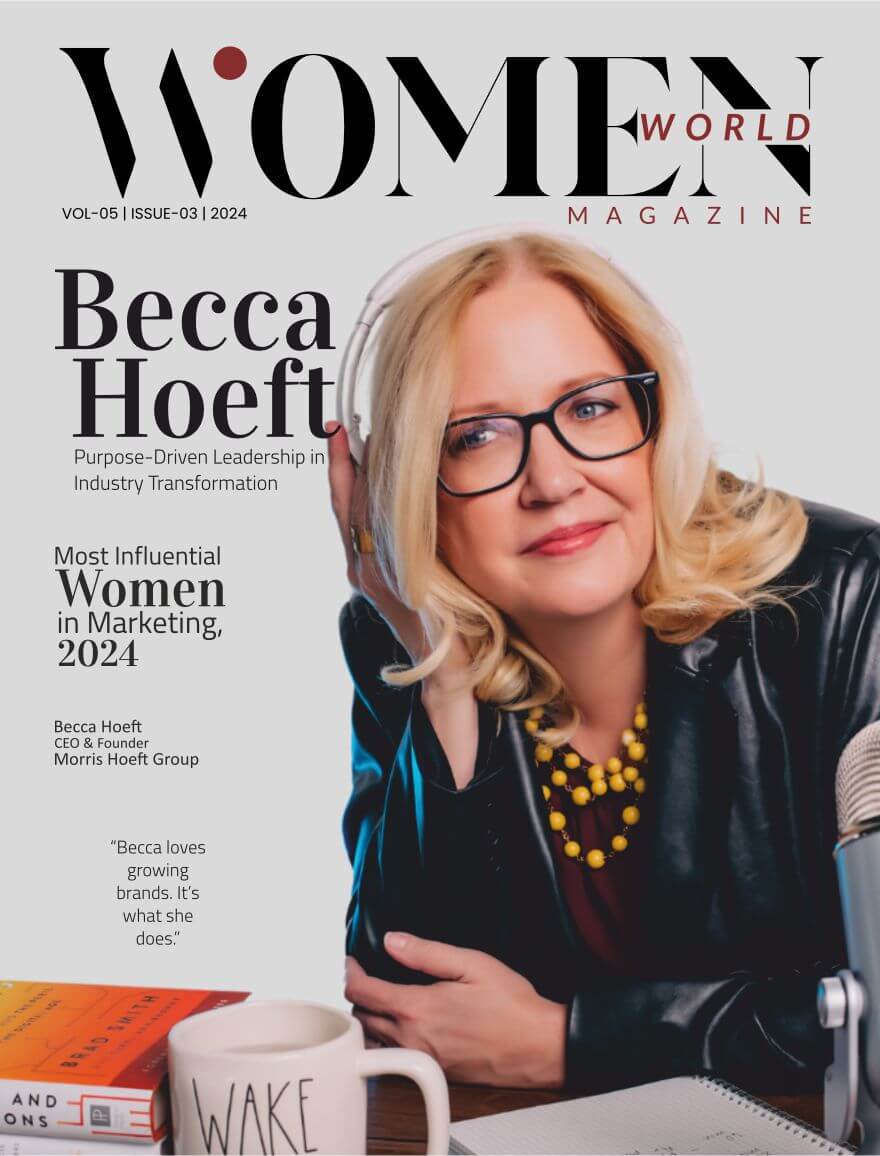

Becca Hoeft: Purpose-Driven Leadership in Industry Transformation
A Visionary’s Path to Growth! In an industry driven by bupurpose and innovation, the need for solutions that go beyond mere profitability is important. In the essence of these solutions, the crucial role of marketing and public relations industry lies in reshaping the sphere of purpose-driven enterprises by fostering vibrant internal cultures and growth marketing. At the forefront of this narrative stands Becca Hoeft, a seasoned entrepreneur renowned for her transformative leadership and unwavering dedication to purpose-driven ventures. Holding the role of CEO & Founder at Morris Hoeft Group, her journey epitomizes resilience and vision, navigating through the vital sphere of entrepreneurship with a reliable commitment to empowering communities and driving positive change. Guided by Becca’s visionary leadership, the Morris Hoeft Group stands as a testament to the transformative power of brands charged with a deeper sense of purpose. Through her innovative approach and unwavering commitment to nurturing growth, Becca continues to shape a narrative where brands transform from mere commercial entities to becoming an inspiration for social change and meaningful progress. Learn more about Becca’s story of purposeful leadership: A Journey of Empowerment Upon graduating from college, Becca moved to Chicago for grad school. Living across the street was a neighbor, Walter, from Nairobi, Kenya. Walter shared stories about his homeland and its vibrant community. It was through this interaction that Kiondo Originals was born—a social enterprise that empowered single moms by employing their craftsmanship to create handwoven bags. Although Kiondo Originals did not last long, Becca cherished it for its social mission of giving back most of its proceeds to the single mothers making the bags. After grad school, Becca moved back to Minneapolis and worked for an agricultural bank. It was a great purpose-driven brand to work for as they worked to feed, clothe, and fuel the world. At the same time, she went through a divorce, had two small kids to parent, and got involved in some startups. It was an amazing time because she was able to try unique and new marketing techniques that these startups were open to exploring. The best part was seeing brand awareness and company growth explode. By 2013, Becca felt the need to change and find purpose in her career again. She wanted to make a difference, just like how she did with Kiondo. A conversation with the CEO of Sunrise Banks, a bank focused on closing the financial equity gap, led her to become the Chief Brand Officer and build the Sunrise brand from a local community bank to an internationally known fintech bank. It was an amazing experience for her. Fast forward a decade later, Becca realized she wanted to grow more than just one purpose-driven brand; she wanted to do it for others, making a larger impact. Thus, the Morris Hoeft Group was formed. Nurturing Growth through Creativity in Teams For her teams, Becca offers each talented report a blank canvas and says, “It’s up to you to decide how beautiful you want to make it, what colors you’ll use, how detailed it will be. As a leader, I will provide direction, such as painting a portrait of a woman (or building a digital marketing program for Product X that improves revenue by 14%), but the creativity and execution are entirely in your hands. My role is to guide, support, give feedback, and answer questions, but true growth comes from tapping into your creativity and thoughts.” Growing Brands with a Purpose Becca loves growing brands. It’s what she does. What’s different about the Morris Hoeft Group is that they focus on purpose-driven brands, brands that are trying to make a difference in the world. Whether it’s a leading technology company that uses artificial intelligence to help individuals build their careers or financial institutions that are closing the financial equity gap, the good they are doing every day motivates her to grow their brands and impact. Embracing New Skills Becca has always been an innovator. When Facebook came out in 2007, she was immediately exploring and experimenting with using it for brands. She didn’t wait for the herd to come in. She led the way and started teaching social media classes around the country for marketers. But innovation doesn’t just happen. She follows the below strategies to stay ahead in the rapidly evolving marketing landscape: Listening to customers and stakeholders is critical for innovation. Reading publications like Harvard Business Review or Fast Company always sparks ideas. Continual learning is key. She loves that MIT has free classes available. She encourages others to learn Python! And finally, she seeks inspiration from outside sources. Recently, she started a podcast, “Is That Cashmere,” with co-host Anna Kincannon where they host an array of diverse guests from all over the world who have done innovative things in their industries. Their stories not only keep her creative, but they inspire her. Building Trust in Your Brand When it comes down to it, a brand is a way to build meaning and trust with your stakeholders and clients. Every time something good comes out of the brand, whether it’s related to corporate social resopnsibility or not (packing food for the homeless, a story about changing or improving a customer’s life, or making a stand against racism), it puts a deposit into the “reputation piggy bank.” The more deposits made, the better off the brand is because it has created meaning and trust. On the off chance that the brand’s reputation is at risk in the media, people already know the brand, and they trust in it, so the withdrawal from the reputation piggy bank isn’t as detrimental if the “reputation piggy bank” savings hadn’t been built up. Personalizing Strategy When Becca builds an executive communications strategy, there are two key things she considers. First and foremost, she must understand the brand’s strategic business objectives. Without that, there is no point in building a communications strategy for an executive.. Secondly, she takes the time to get to know the executives and understand their voices,